Best Music Streaming Apps for Businesses
We get this question all the time from business owners and managers: “Can I use Spotify or Pandora to play music in my store?”
It’s easy to see why. There are plenty of popular music apps designed for personal listening like Spotify, Pandora, iHeartRadio, SoundCloud, YouTube Music, and SiriusXM.
But are these okay to use for your customers or guests? If you’re running a restaurant, retail store, coffee shop, salon, or other business, the answer is almost always no.
Why Consumer Music Apps Aren’t Legal for Business Use
Streaming apps like Spotify, Pandora, iHeartRadio, and SiriusXM are made for personal enjoyment, not public spaces. These consumer services do not include the required public performance licenses that cover business use, unless they are offered through a licensed commercial provider like Custom Channels.
Under U.S. copyright law, any music played “outside a normal circle of family and friends” counts as a public performance and must be properly licensed. That’s why business music services cost more than consumer subscriptions. They include the performance royalties that pay songwriters, artists, and publishers.
If you’re using a personal account to play music in your business, you may be violating both the platform’s terms of service and copyright law. That can result in fines or enforcement from performing rights organizations like ASCAP, BMI, and SESAC.
I use Pandora at Home. Can I Play It in My Business?
Pandora is great for discovering new music at home, but its terms are clear: it’s “for personal, non-commercial purposes only.” That means the regular consumer version of Pandora, even the paid one, is not legal for business use. To use Pandora in your business, you would need to subscribe to Pandora for Business through a licensed provider. That version includes the proper public performance coverage. Many businesses unknowingly violate copyright law every day by streaming personal Pandora or Spotify accounts over their store speakers. It’s a simple mistake, but one that can cost you.
Licensing Considerations
Music licensing isn’t just a legal checkbox. It’s how artists, songwriters, and composers get paid for their work. If your restaurant, hotel, or retail space plays music audible to the public, a license is required. Those fees help sustain the creative ecosystem and ensure artists can keep making the music your customers love.
Legal Alternatives for Licensed Business Music
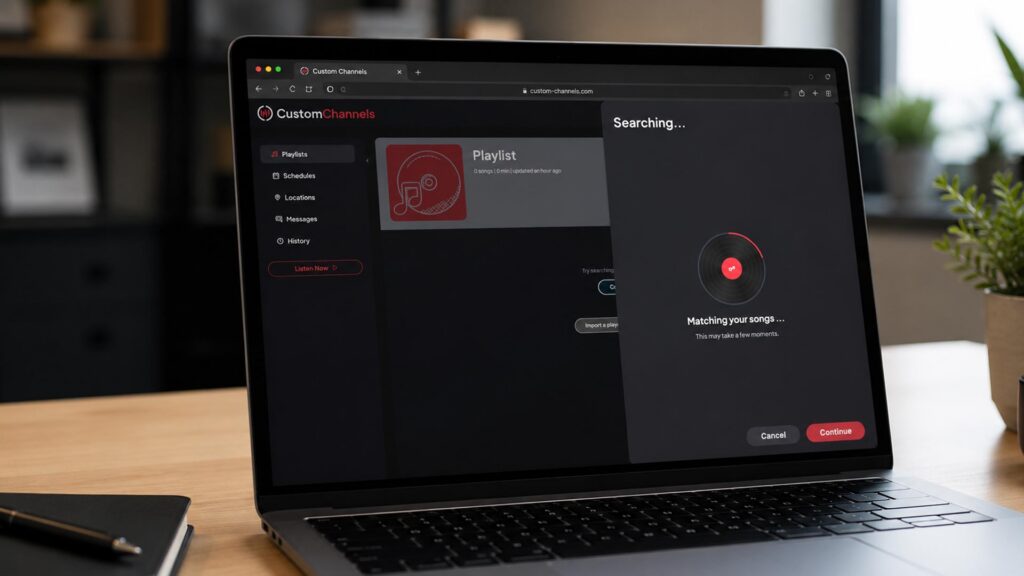
If you want to create the right vibe, connect with customers, and stay compliant, choose a service built for business. Custom Channels provides fully licensed, professionally curated music and messaging for business.
We make it easy to:
- Stream legally licensed music that fits your brand
- Add between-song messaging or promotions
- Customize playlists for your audience and space
Whether you manage a restaurant, retail store, hotel, or dental office, you can create a sound that feels right and stays fully licensed.
The Takeaway
Spotify, Pandora, and other streaming apps are fantastic for personal listening. But for public spaces, you need a licensed business music service that protects your brand and supports the artists behind the songs.
Want to sound great and stay compliant? Use Custom Channels. Pick your music, keep it legal, and make your business sound as good as it looks.
FAQs
What are the best music apps for business?
The best music apps for business are purpose-built commercial streaming platforms that combine licensed music with playlist management, scheduling, and multi-location control. Options like Custom Channels, Rockbot, and CloudCover are designed specifically for commercial environments and include the performance licensing required to play music legally in a public-facing space. Unlike consumer apps, these platforms give operators direct control over what plays, when it plays, and how it sounds across every location.
Can businesses use Spotify for background music?
No. Spotify is licensed for personal, non-commercial use only. Playing Spotify as background music in a business setting violates Spotify’s terms of service and U.S. copyright law, regardless of whether you have a paid subscription. Businesses that play music in a public-facing environment are required to hold commercial performance licenses from PROs like ASCAP, BMI, SESAC, and GMR, none of which are covered by a Spotify account of any tier.
What features should business music apps include?
A business music app should include custom playlist management so operators can control exactly what plays in their space. Daypart scheduling allows music to shift automatically throughout the day to match the energy and pace of the business. Multi-location and zone management gives operators centralized control across multiple sites or areas within a single location. Bundled licensing ensures all performance rights are covered without requiring separate PRO agreements. The best platforms combine all of these features into a single intuitive interface that requires minimal day-to-day management.
How do business music apps handle licensing?
The best business music apps bundle all required commercial licensing directly into their service fee. This covers public performance rights from PROs like ASCAP, BMI, SESAC, and GMR, which are legally required for any business playing music in a public-facing environment. Rather than requiring operators to negotiate and manage separate agreements with each PRO, a bundled licensing model simplifies compliance into a single monthly cost. When evaluating any business music platform, confirming that licensing is fully covered and clearly outlined in the service agreement is an important step before subscribing.
Written by: Mark Willett, Director of Music Strategy, Custom Channels