Music is part of everyday business. It plays in retail stores and restaurants. It fills lobbies, gyms, and waiting rooms. It also shows up in ads, videos, social posts, and websites.
What many businesses do not realize is that all of those situations can count as commercial use of music. And commercial use usually requires permission under copyright law.
The good news is that this does not have to be complicated. This guide breaks music licensing into a simple model so you can quickly understand what applies to your business and how to get covered without slowing things down.
By the end, you will know:
- What counts as commercial use of music
- The two main licensing lanes most businesses fall into
- What is usually required in each lane
- The fastest ways to get compliant
- Common mistakes to avoid
- A simple checklist you can reuse
Quick disclaimer. This article is educational, not legal advice. Music licensing rules vary by country, state, and use case. When in doubt, confirm requirements for your specific situation.
TLDR: Music licensing for commercial use, fast answers
- Commercial use includes music played in your business and music used in marketing
- Most businesses fall into a two-lane model
- Lane 1 covers in-store public performance
- Lane 2 covers ads, video, and branded content
- Each lane has different licensing requirements
- Personal streaming services are a common risk
What counts as commercial use of music?
Commercial use of music means using music to support, operate, or promote a business.
For most companies, commercial use falls into two clear and separate lanes. These lanes are licensed differently, which is why confusion is so common.
Lane 1: Music played in your business
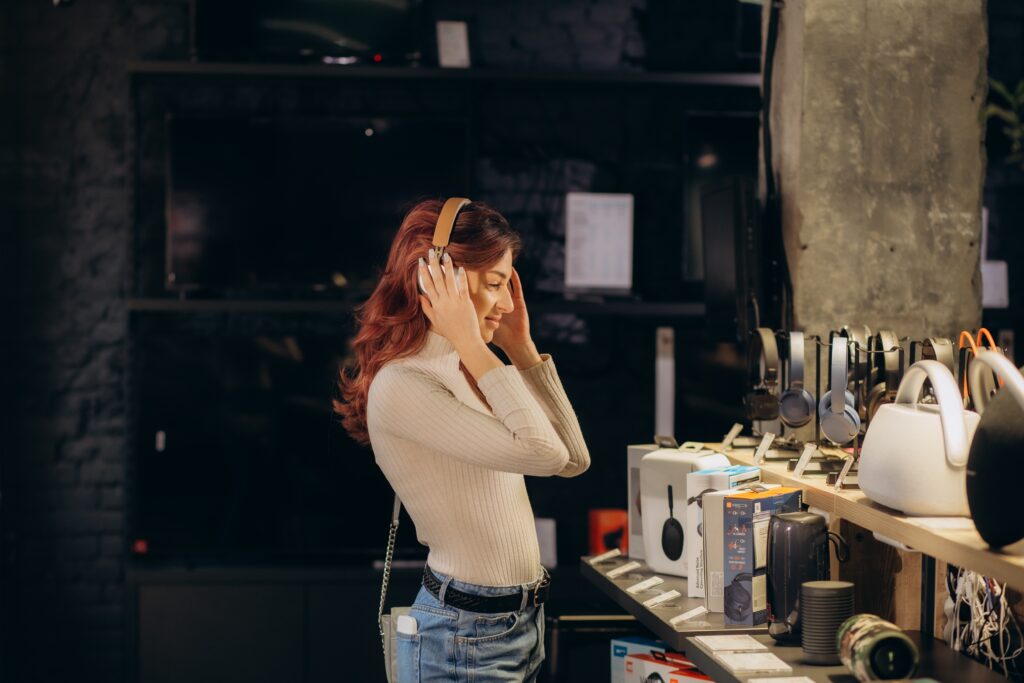
Lane 1 covers music that is played inside your physical business or anywhere customers or staff can hear it. This is about the in-person experience.
If people can hear music while they are in your store, restaurant, office, or space, it is usually considered a public performance under federal copyright law.
Common Lane 1 examples
- Retail store playlists
- Restaurant dining room music
- Music in gyms or studio classes
- Music on hold or in waiting rooms
- Live music or DJs in your business
Lane 2: Music used in ads, videos, or branded content
Lane 2 covers music used in marketing, advertising, and branded content, often online.
This is not background music. It is music paired with visuals or content that represents your brand.
Common Lane 2 examples
- Instagram Reels or TikToks
- YouTube ads or paid social
- Website hero videos
- Client project videos
- Promotional content for commercial purposes
Why the two lanes matter
These lanes are licensed separately.
Being covered for in-store music does not automatically give you permission to use music in ads or videos. And having permission to use music in a video does not automatically allow that music to be played publicly in your business.
Some situations can touch both lanes. For example, playing a branded video with music on a TV inside your store may require:
- Permission to use the music in the video
- Permission to play that video publicly in your business
You do not need to solve every edge case right now. The key is knowing which lane or lanes apply to you.
If customers can hear the music in your business, you are in Lane 1.
If the music helps promote your brand through content or advertising, you are in Lane 2.
Many businesses need both.
Lane 1: Playing music in your business, what’s usually required
When music can be heard in a business or public setting, it is usually considered a public performance under federal copyright law.
What a public performance license means in plain English
A public performance license gives you legal permission to use music where people outside your private circle can hear it.
That includes:
- Customers
- Clients
- Members
- Guests
- Employees in shared spaces
In the U.S., these rights are managed by performing rights organizations that represent copyright holders and rights holders.
Why this gets confusing fast
Music ownership has layers. There is:
- The musical work itself
- The sound recording
- The master recording ownership
Different parties can own each layer. That is why licensing can involve more than one agreement, depending on how music is used.
Common Lane 1 situations
- Retail stores and showrooms
- Restaurants, bars, and cafés
- Lobbies and waiting rooms
- On-hold phone systems
- Fitness classes
- Live music and live performances
- In-store events
Fast reality check: If the public can hear it, assume you need coverage unless an exemption clearly applies.
For food and hospitality businesses, see our guide to a music license for restaurant.
Fast coverage for in-store music: the simplest paths
Most businesses choose one of these two paths.
Path A: License directly
This usually means:
- Contacting rights organizations
- Negotiating license agreement terms
- Reporting square footage and usage
- Managing renewals year after year
This can work for very simple setups. It gets hard fast as soon as things change.
Path B: Use a commercial music provider
This is the fastest option for most businesses.
Commercial music providers bundle public performance rights into one subscription. They also handle playback, reliability, and documentation.
This approach works well for:
- Retail brands
- Restaurants
- Gyms and studios
- Multi-location businesses
You can learn more in our guide to a music license for business.
What you need upfront
To get covered quickly, be ready to share:
- Number of locations
- Rooms or zones with music
- Approximate square footage
- Business type
- How music is delivered, like streaming devices, TVs, or DJs
Lane 2: Music in ads, video, and social, what rights you need
Music used in marketing is a different lane than in-store playback.
This includes:
- Ads
- Social posts
- Website videos
- Client work
- Television broadcasts in business environments
The two rights you must clear
- Sync rights
This allows music to be paired with visuals. - Master rights
This allows the use of a specific recording.
Simple example.
Using a famous song in a video requires permission for the song itself and the recording of that song.
Using a cover version changes who you license from. It does not remove the need for licensing.
Platform libraries are not always enough
Social platforms often provide music libraries. Those libraries are usually designed for personal creators. Business use can have different rules.
Always confirm:
- Commercial usage rights
- Paid versus organic use
- Territory
- Duration
- Whether the music can be used for client work
Get covered fast for marketing content: compliant routes
Route 1: Original or commissioned music
- Make sure contracts clearly assign or license rights
- Confirm usage, term, and territory
Route 2: Stock or royalty-free libraries
- Royalty-free does not mean rule-free
- Read the license
- Save documentation
Route 3: Licensing partners for known tracks
- Useful for major campaigns
- Timelines and budgets vary
- Documentation matters
Red flags
- Vague licenses
- No proof of master ownership
- Unclear territory or time limits
- No written permission from the copyright owner
Common mistakes businesses make and how to avoid them
These come up all the time.
The big ones
- Using personal streaming services at work
- Assuming TV or radio playing audio where customers can hear it is always allowed
- Using trending audio in paid ads without checking rights
- Forgetting mechanical license requirements when applicable
- Not keeping records
How to avoid trouble
- Treat music like any other licensed business asset
- Centralize control
- Save everything
More help lives in our licensing resources.
Fast compliance checklist
Use this. Keep it simple.
- Identify usage: in-venue, marketing, or both
- List music sources, locations, zones, and who controls playback
- Choose the fastest compliant path for each lane
- Save licenses, invoices, and agreements in one folder
- Create a simple internal music policy
- Re-check when you add locations or launch new campaigns
Music license for commercial use: FAQs
Do I need a music license if I play music quietly in my store?
Yes. Volume does not change whether music counts as a public performance.
Is Spotify or Apple Music allowed for business use?
No. Personal streaming services are for private listening only.
Do I need separate licenses for in-store music and social media ads?
Yes. These usually require different rights.
Does royalty-free music mean I am fully covered?
Not always. Royalty-free still has rules. Read the license.
What happens if I do not have the right music licenses?
You may face copyright claims, legal action, fines, or forced agreements.
How often do music licensing requirements change?
Rates and terms change often. Review coverage as your business grows.
Get compliant fast and keep it simple
You do not need to become a music licensing expert.
You just need a clear model.
Lane one: music played in your business
Lane two: music used in content and ads
Many businesses need both.
The goal is simple. Move fast. Stay compliant. Protect the brand experience.
Talk to Custom Channels to get licensed music tailored to your brand so you can move fast, stay compliant, and sound great everywhere.
Written by Josh Torrison, Head of Marketing, Custom Channels
Reviewed by Mark Willett, Head of Partnerships, Custom Channels
Josh Torrison has spent nearly a decade at Custom Channels helping national brands manage music compliance, curate on-brand sound, and resolve licensing questions across retail, hospitality, and restaurant environments.