Retention in a gym or fitness center comes down to one question: is this a space where I want to spend my time? Music affects member retention by having the right music, played the right way, for the specific community you have built. The best music for locker rooms or lobbies may be different than the best BPM for gym cardio and strength training. Get it right, and members feel like they belong. Get it wrong and something feels off, even if they cannot explain why. Over time, they start skipping sessions. Then gym members start to cancel.
Most gym and fitness center operators think about retention via pricing, programming, staff, equipment, and community. Those things matter. However, one part of the member experience runs in the background every single day – the music. The best BPM music for fitness centers often sits between 125 and 140 BPM, helping members move with more energy and stay connected to the studio experience. Custom Channels serves 10,000-plus businesses, including gyms, fitness centers, wellness studios, restaurants, retailers, and multi-location brands. Our music team sees how sound works across real business environments every day, not just in theory.
Why Do Members Stay and Why Do They Leave?
Retention in a gym or fitness center comes down to one question: is this a space where I want to spend my time?
Members chose your facility for a reason. They may want better equipment, better classes, a stronger community, a cleaner environment, or a more motivating place to train. What keeps them coming back is not just the workout. The space has to feel right every time they walk in.
Music shapes that feeling more than most operators realize. Consumer research cited by MRC Data found that 40% of people stay longer in a business when they like the music. As a result, members have more time to connect with the community and build habits around your facility.
Business music research has also found that music affects staff energy. In one workplace music report, 77% of small and midsize business owners said music increases employee morale. In a fitness business, staff energy and member energy feed each other. Members rarely cancel and say the music was bad. Still, music can be part of why they stayed or left.
A gym that feels energizing and on-brand gives people another reason to come back. By contrast, a space that feels generic, repetitive, or disconnected from its members gives them one more reason to drift.
BPM Is the Foundation of the Member Experience
Before genre, before era, before artist, tempo determines whether the music fits the room. One study published in the National Library of Medicine tested high-tempo music at 130 BPM. Participants listening to that music exercised 10.7% longer than participants who exercised without music.
Music that is too slow for the energy of the space creates drag. Members feel it physically, even if they cannot name it. That is why BPM comes first. Genre is secondary.
The best BPM music for fitness centers is not one-size-fits-all. Different spaces, workout styles, and times of day call for different tempos.
| Fitness Area | Recommended BPM | Genre Fit | Energy Goal |
|---|---|---|---|
| Open strength floor | 128 to 140 | Rock, hip-hop, classic rock | Sustained power |
| HIIT or performance area | 130 to 150 | Hip-hop, EDM, hard rock | Peak output, high drive |
| Cardio floor | 125 to 140 | Pop, EDM, dance | Rhythmic sync, endurance |
| Yoga, stretch, or recovery | 60 to 90 | Acoustic, ambient, instrumental | Calm, reset |
| Lobby or welcome area | 100 to 120 | Upbeat pop, indie, contemporary | First impression, energy |
| Locker room | 80 to 110 | Chill pop, soft R&B | Decompression |
For a full zone-by-zone breakdown, see our guide on what music to play in a gym.
Why Algorithm-Based Streaming Works Against You
Many fitness businesses start with a personal streaming account or an algorithm-based service like Spotify, Apple Music, or YouTube Music. It feels familiar. But gyms and fitness centers need more control and licensing than those tools provide.
Algorithm-based services group songs by metadata, listening behavior, and broad similarity signals. They do not manage energy flow the way a fitness space needs. For example, a slow ballad can follow a high-intensity track. The energy in the room drops before anyone knows why. Over weeks and months of workouts, members feel the difference.
Playlist drift makes it worse. Algorithm-based services can change the feel of a playlist over time. A playlist that sounded right in January may feel different by spring. Often, operators do not notice until a member says something or the room feels off. Shuffle mode compounds the problem. Shuffle pulls from a bucket of songs in any order. It does not account for BPM, mood, facility zone, or the energy arc of a workout.
Custom Channels hears this often from fitness businesses that switch from consumer apps. The music felt off. Energy dropped during workouts. Nobody could point to the exact reason. Usually, those tools simply were not built for a fitness environment.
The Repetition Problem
Custom Channels playlists contain 2,000 or more songs per playlist. Blended playlists can reach 6,000 to 8,000 songs. At three minutes per song and eight hours of operation, members will rarely hear the same song twice in a single visit.
Repetition is invisible when it works and noticeable when it does not. A member who hears the same song for the third time this week is already forming an opinion about your facility.
How Do You Match the Playlist to Your Community?
This is where music gets personal. A strength-focused gym and a high-end Pilates studio are not the same community. Neither are a recovery-focused wellness space and a high-energy cardio facility. In other words, none of them should sound the same. Members chose your gym or fitness center for a reason. The music should reflect that reason.
Before curating playlists for fitness businesses, ask a few questions:
- Who is my member?
- What do they listen to outside this facility?
- Is the music helping to create the energy I want someone to feel thirty seconds after walking in?
- What does this space feel like at its absolute best?
The answers shape the playlist. A family-oriented fitness center may need something upbeat, familiar, and clean. Performance-focused strength gyms may need music that makes people feel capable of more than they thought. A premium Pilates or recovery concept may need something more polished, modern, and intentional.
Music becomes part of the brand. When a member hears a song outside your facility and thinks of your space, that is brand equity. That keeps people connected when life gets busy. MOD Pizza puts this idea clearly: “Music is a critical part of the customer experience. Whether you’re in Seattle or Chicago, MOD should sound like MOD.” The same principle applies to fitness businesses. Every visit should feel like your brand.
Choosing the Right Custom Channels Plan
With Core, fitness businesses get 150-plus pre-curated playlists for $25 per location per month. Core gives operators licensed, clean, play-and-go music without extra management.
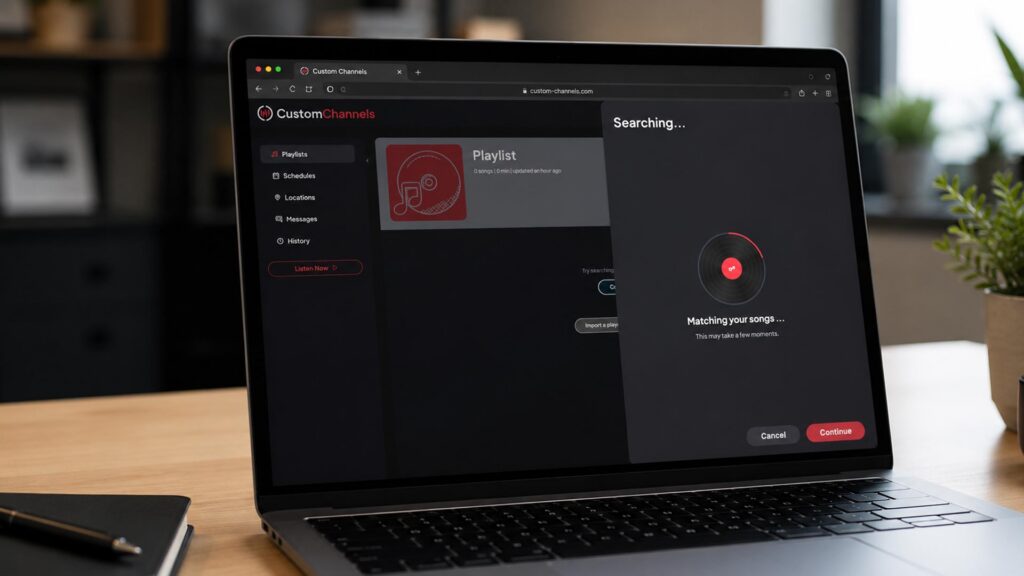
With Control, fitness businesses get everything in Core for $35 per location per month. They can also blend pre-curated playlists, build playlists from scratch, import a playlist from Spotify directly into the interface, schedule by time of day and location, use AI-recommended playlists, manage multiple locations, and support multi-user management. As a result, Control is best for operators who want to build something specific to their community.
With Curate, fitness businesses get everything in Control plus a dedicated music programmer who builds and evolves fully custom playlists through ongoing collaboration. Curate offers custom pricing and works best for premium facilities that want a hands-off, fully managed sound, or larger operators with many locations. Additional zones are $15 per month across all plans. See Custom Channels pricing to compare plans.
Dayparting: The Right Playlist at the Right Time
A fitness center at 6 am and at 7 pm are two different environments. Early morning members are often warming up physically and mentally. They may need music that builds energy gradually. Midday and lunch crowds may want full energy right away. Evening members may need music that helps them shake off the workday before they can push hard.
Managing this manually is not realistic. Staff should not have to switch playlists throughout the day. Even if you ask them to, it will not happen consistently. The Control plan includes scheduling tools that handle dayparting automatically. Operators can build playlists for each time block, assign them to a schedule, and let the music shift on its own.
That can mean different playlists for morning, afternoon, and evening. It can also mean different sounds for weekdays, weekends, or specific locations. That is the difference between a fitness business managing its music and simply letting music play.
Music as a Retention Investment
Every member who cancels represents lost monthly recurring revenue and the cost of winning someone new. Fitness businesses already operate on high expectations and tight margins. Therefore, retention is not optional. Music is one of the lowest-cost, highest-impact investments an operator can make in the member experience. The right playlist does not just fill silence. It reinforces why the member chose your facility, builds emotional connection, and makes every visit feel like the experience they signed up for.
Gyms that treat music as an afterthought leave a retention tool sitting unused. Fitness businesses that treat music as part of the brand use it to make members feel like they belong somewhere worth staying. That is the connection between music tempo, member retention, and gym experience. The playlist is not the whole reason someone stays, but it can be one of the reasons your fitness center feels hard to replace.
Building the Sound Your Members Come Back For
The best fitness playlists are not random. They come from deliberate decisions about tempo, community, daypart, and playlist depth.
Custom Channels curates music specifically for fitness environments, with real human review behind every track. Every playlist is clean-edited and fully licensed for background use. In addition, the rotation runs deep enough that members do not feel like they are hearing the same songs on repeat.
Core covers gyms and fitness centers that want great out-of-the-box playlists with zero management. Control covers operators that want to build something specific to their community, with full scheduling and blending tools. Curate covers fitness businesses that want a music programmer in their corner, building and evolving the sound with them over time.
For licensing details, see our guide to music licensing for gyms. Visit the music for gyms page to see how the platform works for fitness facilities, or see Custom Channels pricing and start a free trial today.
Frequently Asked Questions
How does music affect member retention in fitness centers?
Music affects member retention by shaping how the space feels every time someone walks in. The right playlist can support energy, mood, brand connection, and routine. When members enjoy the environment, they are more likely to stay longer, build habits, and keep coming back.
What is the best BPM music for fitness centers?
The best BPM music for fitness centers depends on the area and workout type. Active workout spaces often work best around 125 to 140 BPM. Strength areas may sit around 128 to 140 BPM, cardio areas around 125 to 140 BPM, and yoga or recovery spaces closer to 60 to 90 BPM.
How does background music affect workout performance?
Background music can affect workout performance by helping members move with the beat, maintain energy, and stay focused. Music that matches the pace of the workout can make the room feel more motivating. Music that is too slow or repetitive can make the space feel flat.
Why is playlist repetition a problem in gyms?
Playlist repetition becomes a problem when members hear the same songs too often. At first, they may not notice. Over time, repeated songs can make the gym feel stale or unmanaged. Deeper playlists help keep the experience fresh without requiring staff to constantly change the music.
Why should gyms use curated playlists instead of consumer streaming apps?
Curated playlists are built for business environments. They can account for BPM, energy flow, clean edits, brand fit, and time of day. Consumer streaming apps are designed for personal listening, so they may drift over time, repeat too often, or play songs that do not fit the room.
How can dayparting improve the gym member experience?
Dayparting helps fitness centers match the music to the time of day. Morning members may need music that builds energy gradually. Midday members may want higher energy right away. Evening members may need music that helps them transition from work into a workout mindset. Scheduling those changes keeps the experience consistent.
Written by Mark Willett, Director of Music Strategy, Custom Channels