Retail media is one of the fastest-growing categories in advertising. For years, that growth lived almost entirely online — sponsored search results, product listings, digital placements.
That is changing. As brands look for ways to influence customers closer to the point of purchase, physical stores are becoming part of the retail media conversation. And one of the most overlooked channels inside those stores is audio.
Music and in-store messaging are no longer just operational tools. They are becoming media.
Industry research reinforces this shift. Retail media is projected to surpass $200 billion globally by 2026, and analysts increasingly point to physical stores as the next major growth area as ecommerce retail media matures. Media channels that operate closest to the point of purchase are gaining the most attention — and in-store audio fits that model naturally.
Retail Media Is Moving Closer to the Moment of Decision
The reason retail media has grown so quickly is simple. It works. It reaches customers when they are already shopping and already deciding.
Physical stores offer that same advantage. Customers are in buying mode — browsing shelves, waiting in line, walking aisles, and making last-second decisions.
Audio reaches customers in those moments without requiring screens, clicks, or attention shifts. When done well, it influences behavior while feeling like part of the environment.
Consumer response reinforces this shift. According to industry research, 34% of shoppers say they are likely to consider a product after hearing an in-store audio promotion — highlighting why audio is gaining serious attention as a retail media channel.
Why In-Store Audio Fits Retail Media So Naturally
In-store audio checks many of the same boxes brands look for in retail media. It operates close to the point of purchase, scales across locations, can be scheduled and targeted, and does not rely on personal data to be effective.
Music sets emotional context. Voice messaging provides guidance and direction. Together, they create a channel that can support promotions, discovery, loyalty, and brand partnerships.
The key is that audio must feel intentional. Overhead announcements that interrupt the space do not behave like media. Audio that blends seamlessly into the environment does.
Research also highlights audio as one of the most scalable and cost-efficient in-store media formats. Unlike screens, audio does not require new hardware or visual attention. When designed properly, it integrates into the environment while still delivering measurable messaging at scale.
From Announcements to Campaigns
Historically, in-store messaging was treated like a utility. Announce a sale. Share a reminder. Push a generic message to every store.
Retail media requires a different mindset.
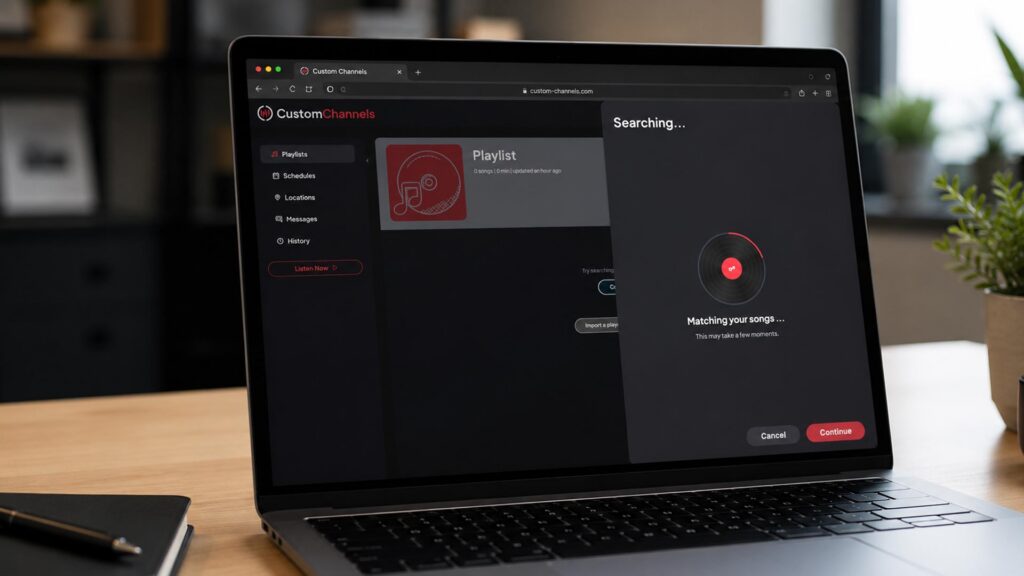
Modern in-store audio allows teams to run campaigns the same way they do in digital channels — specific messages in specific stores, regional or market-level campaigns, daypart scheduling, and limited-time promotions.
This is where in-store audio starts behaving like media instead of background noise.
Measurement Is What Completes the Shift
What ultimately separates media from ambience is measurement.
Retail media has grown because it promises accountability. That expectation is now entering physical environments.
Playback history, proof of play, and reporting allow businesses to understand what messages ran, where they ran, and when they ran. When connected to systems like loyalty platforms, in-store audio can also be tied to real outcomes.
This is how audio moves from an expense to a performance channel.
Is Your In-Store Audio Behaving Like Media?
- If you’re still using audio as a utility: Generic announcements and unmanaged playlists leave influence on the table. Audio designed with intent drives real behavior.
- If you’re running promotions: In-store audio can support those campaigns the same way digital channels do — scheduled, targeted, and measurable.
- If you’re not measuring playback: Proof of play reporting is what separates a media channel from background noise. Without it, you’re guessing.
Music for Business Is the Foundation
None of this works without the right foundation.
Music for business sets the tone, pacing, and emotional feel of a space. Messaging layered on top of poorly chosen music will always feel disruptive.
When music and messaging are designed together, audio becomes cohesive. Messages fade in naturally, blend into the mix, and fade back out. Customers notice without feeling interrupted.
This is why modern retail media strategies increasingly include audio as a core part of the in-store experience.
What This Means Heading into 2026
As retail media continues to expand beyond ecommerce, physical stores will play a bigger role. Audio is one of the easiest ways to activate that opportunity without adding screens or complexity.
Businesses that treat in-store audio as media will be better positioned to support promotions, partnerships, and measurable outcomes.
Those who continue to treat it as background noise will miss the moment.
Zooming Out
This shift is part of a larger set of changes happening across music for business and in-store audio. Retail media expectations, first-party data, and accountability are converging.
For a broader look at what is coming next — including AI, measurement, and first-party data — read our hub article on 2026 trends in music for business and in-store audio.
If you want to see how modern in-store audio works in practice, explore AI audio messaging and campaign tools or learn more about music for business solutions for retail.
In-store audio is no longer just background — it’s a retail media channel hiding in plain sight. The businesses that treat it like one will be the ones who pull ahead in 2026.
Industry trends referenced from Coresight Research’s analysis of retail media growth and the expansion of in-store media channels.
Written by: Mark Willett, Director of Music Strategy, Custom Channels